
About the author
Senior Education Research Associate, QUESCREN
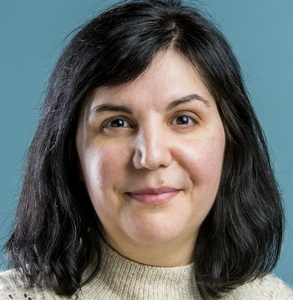
Lina is a two-time Concordia University graduate with Master’s degrees in Educational Studies (2020) and Media Studies (2007). She has worked in the field of education in various capacities – as an university instructor, educator and tutor for high school and elementary school students, workshop facilitator for adult learners, administrator, researcher, and writer. Her research interests concern literacy, alternative forms of education, and the cultural dynamics of language, particularly as they play out in the field of publishing and in the book as an object.
June 30, 2026
The future of Quebec’s education system was the focus of a large public forum in Montreal in early June. The Grand rendez-vous citoyen sur l’éducation, organized by the citizen movement Debout pour l’école, expressed a growing concern that Quebec’s education system faces structural challenges that require significant changes.
QUESCREN was among the organizations that attended.
Discussions were guided by Pour une nouvelle “révolution tranquille” en éducation, a white paper developed by Debout pour l’école through public consultations and research. The document outlines four priorities: reducing educational inequality, adequately funding public education, democratizing school governance, and launching a province-wide consultation on the future of education (États généraux sur l’éducation).
An increasingly stratified education system
Participants noted that Quebec’s education system—particularly the French-language sector—has become increasingly stratified. Many referred to a “three-tier” system (l’école à trois vitesses), a phrase commonly used in Quebec public debate to describe the growing divide between regular public schools, selective programs in public schools, and private schools. Some even suggested that the system is more accurately understood as “four-tier” when programs for special-needs students are considered.
Rather than functioning as a common public system, schools operate in an increasingly competitive environment where families seek access to selective schools and programs. It is now well documented that this contributes to a more unequal school system, with growing socioeconomic differences between students across schools and increased pressure on teachers (see the recent book Séparés mais égaux and the report Remettre le cap sur l’équité).
Beyond questions of access, speakers emphasized that the issue is fundamentally about the purpose of public education. Schools shape not only what students learn, but also how they participate in society and relate to others. From this perspective, increasing differences between schools create unequal educational opportunities and undermine social cohesion.
Several participants pointed to École ensemble’s proposal for a common public school network, another citizen-led initiative, as a possible path towards a more equitable system. It calls for a single network of publicly funded schools that offer free, non-selective access, with subsidized private schools either joining the network under these conditions or remaining private without public funding.
A growing call for an États généraux sur l’éducation
Participants argued that decisions about education should be made through broad public debate. They also noted that today’s challenges are too complex to be addressed through isolated consultations and require coordination across the education system.
This idea also received political attention. During a panel featuring representatives from the Parti québécois, Québec solidaire, and the Parti libéral du Québec (the Coalition Avenir Québec and the Parti conservateur du Québec were invited but did not attend), the three parties expressed support for a province-wide consultation. The PQ representative stated that their party would launch such a process if elected.
Participants pointed to earlier large-scale consultations, including the Parent Commission in the 1960s and the États généraux in the 1990s. While seen as valuable examples of public engagement, many argued that today’s context, marked by technological changes, demographic shifts, teacher shortages, and evolving labour market needs, requires a renewed process adapted to current realities.
Some speakers argued that any future consultation must be inclusive, transparent, and able to translate recommendations into sustained policy action. In this sense, this new call for an États généraux reflects not only a desire for another consultation, but also for a different relationship between public dialogue, research, policymaking, and educational governance.
Democratic school governance
School governance and local decision-making emerged as another recurring theme. Recent reforms have centralized decision-making within the Ministry of Education, reducing the autonomy of local actors and limiting participation by families and communities. Some suggested that this top-down approach weakens ties between education institutions and the communities they serve.
These discussions highlight both differences and areas of convergence between the French- and English-language sectors. Following the adoption of Bill 40 in 2020, elected school boards were replaced by school service centres in the Francophone system. English school boards, however, successfully challenged the reforms in court and continue to operate under an elected governance model. Despite these differences, both sectors share concerns about how to keep decision-making responsive to local needs. Comparing these governance models may provide insight into different ways of supporting democratic participation in education.
Why this matters for Quebec’s English-language education community
Although much of the conversations during the event focused on the French-language sector or on Quebec’s education system as a whole, many of the issues raised are directly relevant to the English-language education community as well.
Meaningful participation from the English-language sector in an eventual États généraux is essential. Without this contribution, the proposed reforms risk overlooking minority communities and the institutions that support them.
More broadly, conversations such as this citizen forum provide an opportunity for the English-language education community to engage more systematically in provincial debates, contribute research evidence and lived experience, identify areas of common concern with their Francophone counterparts, and help ensure that education policy in Quebec reflects the diversity of its population. In this sense, participation is not only about representation but also about shaping the future of a shared education system.


